Showing posts with label nonfiction. Show all posts

Thursday, August 11, 2016

Quick Takes

Just popping in here with some quick thoughts about a few of the books I've read recently. First up is Vinegar Girl by Anne Tyler. Part of Hogarth's Shakespeare series, which commissions current authors to reinterpret some of Shakespeare's classic plays, this novel offers a modern version of The Taming of the Shrew. This was my first time reading anything by Anne Tyler, who is one of those quietly but widely renowned authors, and I was really impressed with her writing. Her style, at least in this book, manages to convey a compelling drama while still being rooted in the ordinary little facets of everyday life. I also appreciated the direction went she with the story. A modern reinterpretation of The Taming of the Shrew could easily go a very cliche route--I'm imagining something in which Kate is portrayed as some kind of driven "career woman" who needs to be softened. Instead, Tyler takes a more subtle, unexpected route, casting her Kate as the 30 year old daughter of an eccentric scientist whose blunt personality starts to veer toward bitterness as she feels increasingly trapped by her life circumstances. The romantic lead she clashes with is her father's research assistant, an Eastern European immigrant whose visa is about to expire. It's the type of pairing you don't read about every day, and it plays out in a very satisfy way.


Next is a Persephone book, Few Eggs and No Oranges, the wartime diary of Vere Hodgson that spans the years 1940-1945. You might say that this falls at the more utilitarian end of the diary spectrum. It's not a memoir in which Hodgson has wrapped up her experiences in a neat and tidy package, nor is it secret diary in which she's revealed her innermost thoughts and feelings. Instead, this is a diary that she wrote and circulated among relatives living abroad as a way of updating them on her life in London during the war. She chronicles each day in a brisk way, succinctly recording the work she does, the increasingly skimpy food rations that she eats, and the endless air raids she experiences. There is very little plot beyond this sometimes repetitive chronicling, yet it is compelling in its own way. It gave me a new and deeper understanding of World War II from simply absorbing the daily grind of it through Hodgson's eyes. In a similar way, I also grew to love Hodgson as her wonderful, resilient character was revealed from witnessing several years' worth of her daily activities. At around 600 pages, I'll admit this may not be a book for everyone, but it's a real treasure for anyone who's interested in WWII and the female writers of the period.


Finally, a book that didn't quite his the mark for me: The Murder of Roger Ackroyd by Agatha Christie. I was excited to read this mystery after seeing it highly praised on a few of my favorite blogs in recent months. It's widely thought of as one of Christie's best, with a completely unexpected ending that was apparently very innovative for its time. Unfortunately, I think the vague allusions I had read about this amazing ending were exactly what spoiled the novel for me. From page one I found the characters to be a little dull and the plot a little hard to get into, but I kept reading on high alert, looking at the book from every angle to try to guess the ending. I did eventually hit on it, which made the end of the novel feel like more of a big letdown than a big reveal.


What are you reading these days?
SaveSave

Thursday, March 17, 2016

WWI in Books

Last October, I wrote about how everything I was reading and watching seemed to align around World War II. Now I've jumped back by a few decades to focus on World War I, with two of the best books that I've read recently both set during that time period.


(Vera Britain, image via here)

First, I finally got around to reading the memoir Testament of Youth by Vera Brittain. Published in the 1930's, it looks back on Vera's life when she leaves her place at Oxford to serve as a nurse during the war. Brittain writes about her experiences at the various hospitals she's posted at, both in England and abroad, about the deaths of her fiance and her brother, and finally about her subsequent return to Oxford to complete her studies after the war. It's easy to see why Testament of Youth has been considered one of the definitive literary accounts of WWI. Although Brittain brings 15 years' worth of perspective to her narration , she extensively uses excerpts from the actual diaries she kept during the war. The effect of that combination makes for one of the most compelling and moving books I've read in any genre.


After reading A Testament of Youth, I can see how it probably serves as source material for more recent works set during that time period, from the early seasons of Downton Abbey to Wake, the 2014 novel by Anna Hope. As the book's description points out, the word wake has several meanings: to emerge from sleep; a ritual for the dead; and a consequent or aftermath. Set just after the war, Wake illustrates these different meanings by using three different story lines in which three women interact WWI veterans in different ways. Their stories end up being intertwined, and are also woven into a narrative that follows the journey of the body of an unknown soldier as it is removed from its resting place in a French field and makes it way to London for a ceremonial burial. This was a beautifully written novel with smart plotting and character development. I can give it the highest compliment I can think of lately, which is that I can easily imagine this being a novel written by a beloved but forgotten mid-century writer only to be reissued by Persephone Books. Happily, it was written by a modern author, a fact that leaves me eager to read what Anna Hope writes next.

Wednesday, December 2, 2015

Etty Hillesum

I recently finished reading An Interrupted Life: The Diaries and Letters of Etty Hillesum, 1941-43. I probably would not have sought out this Persephone book had I not come across a copy at a book sale. There I picked it up for its signature grey jacket, barely glancing at the title. Upon further research, I saw the book described as a young adult's answer to Anne Frank. This is a simplification, but apt in the sense that it's a work that should be taught alongside the works of Anne Frank and Elie Wiesel.


Born in 1914, Etty was twenty-seven and living in Amsterdam in 1941, during a time when its Jewish population was beginning to be deported by the Nazis. Etty lived in a house with several bohemian housemates, gave Russian lessons, and worked for the Jewish Council. She began studying with Julius Spier, a psycho-chirologist who combined Jungian analysis with palm reading. They developed a close friendship that at times veered into a love affair, and Etty grew to view herself as a disciple of his teachings. With Spier, Etty undertook the study of Biblical, religious, and philosophical works, and found her own spiritual development as a result. This is the basis of most of the diary entries in the first half of the book. The second half is made up of letters Etty wrote to her friends in Amsterdam after she was sent to the Westerbork camp in 1942. Through these, she paints a picture of life in a camp where Jews waited to be deported to other concentration camps farther East. Etty and her family were themselves deported to Auschwitz, where they died in 1943.

This is a difficult book to write about, or make any attempt to review. I can't honestly say that I enjoyed it, although I found many parts to be very inspiring. This is especially true of the Etty's diary entries, which show how she relied on her inner spirituality to find happiness and a sense of peace even as the conditions for Jews in Amsterdam were growing more dire. At the same time, though, the diary entries  feel somewhat repetitive as Etty continually revisits her relationship with the much older Spier, which can seem questionable at best from a modern perspective. I found the letters in the second half of the book to be more engaging and was fascinated by Etty's descriptions of her year at Westerbork. Her portrayal of the camp is that of a microcosm of the outside world.  Its residents somehow find a modicum of normalcy even in the face of the atrocities that occur on a daily basis. Friendships are made, cliques are formed, and Etty's resilient attitude shines through it all.

Etty's writing is interesting and inspiring, yet also very difficult to encounter at times. The strength she exhibits in the face of horrific events is truly heartbreaking and I found myself reluctant to pick up the book at times. What kept me going was a certain sense of duty to reading her story. As far as I can tell, Etty is not as well known as she should be--at least not here in the U.S. She deserves a more prominent place in the canon of WWII and Holocaust literature and I'd encourage anyone to seek this book out.


Monday, January 6, 2014

What I Read On My Christmas Vacation

Fans of the movie A Christmas Story might think the title of this post sounds a little bit like the title of a theme, like the kind that Ralphie writes when he is assigned "What I Want For Christmas" and waxes poetic about his Red Rider BB Gun. I guess that's only fitting since the first book I read over the holiday break was the basis for that film:  In God We Trust, All Others Pay Cash by Jean Shepherd, who also wrote the screenplay and narrates the movie. I picked this book up for a dollar at a booksale and had been saving it to read during the holiday season. Nominally a novel, it reads more like a series of essays about growing up in Indiana during the Depression linked only by short interludes in which an adult Ralphie reminisces with one of his childhood friends. The first chapter, which tells the story of Ralphie and the BB gun, is the only one set at Christmas, although later, unrelated chapters contain elements that were incorporated into the movie version, like the infamous leg lamp. All of the stories in the book are told with a nice humorous, nostalgic tone, but some of them did fall kind of flat for me. Knowing that the Shepherd later wrote the script for the movie makes the book feel like a first draft that was subsequently revised and tightened up to bring all of the best parts together into a more cohesive storyline.


Another book I was spurred on to read after seeing the film version was Silver Linings Playbook by Matthew Quick. Although there were again some big differences between the two versions, both worked equally well in telling the story of a man trying to recover from mental illness and win back his ex wife, with different degrees of success, by adopting an optimistic attitude about life. Quick deals with his characters and subject matter in a way that never veers into cliches or stereotypes, which was refreshing and surprising for a feel-good novel that deals with topics that are often portrayed in an over-the-top way.


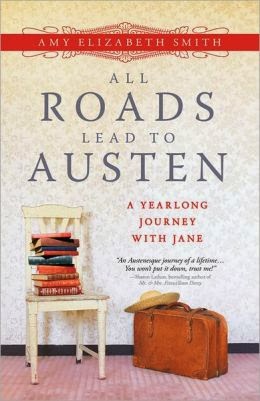
And finally, I read the literary memoir All Roads Lead to Austen by Amy Elizabeth Smart, a literature professor who spent a year traveling through Latin America conducting book clubs about Jane Austen novels in Spanish to see how her work translated into other cultures. The most interesting parts of this book were the author's descriptions of the different countries she visited and accounts of the cultural mishaps she faced when things were lost in translation. Less interesting were the recaps of the book discussions she led. Each group's discussions rehashed much of the same territory and the points they raised about Austen's work weren't anything new or exciting. Although a bit tepid overall, the book highlights the timeless, cross-cultural appeal of Austen's work, making for a pleasant enough read for fans of Jane.


Thursday, January 2, 2014

New Year, New Books

Happy New Year!

How was your holiday? Santa was very good to me and brought something that's on my perennial wish list--a big stack of new books.


There's a lot I'm looking forward to reading here: The Lowland by Jhumpa Lahiri, one of the current releases I've been eager to read; Mary Oliver's collection of poems and essays for dog lovers; another Nancy Mitford novel and Elizabeth Bowen's The House in Paris, widely touted by book bloggers; a bit of nonfiction in Anne Lamott's Bird by Bird and David Sedaris's latest collection; and Giada's Feel Good Food to satisfy the inevitable urge to cook a little healthier after the holidays.

Did you find any books under your tree this year?

Tuesday, September 17, 2013

Noblesse Oblige

Noblesse Oblige is an unusual little book that I picked up at a used bookstore on Cape Cod. Edited by Nancy Mitford, it's a slim volume that proclaims itself to be "an enquiry into the identifiable characteristics of the English Aristocracy". It makes this enquiry though a series of essays by Mitford, Evelyn Waugh, and others that dissect the distinctions, primarily related to language and speech, between the British upper class and everyone else.


The collection opens with an essay about sociological linguistics by Alan S.C. Ross in which he outlines some of the differences between upper class (U) and non- upper class (non-U) usage. This covers everything from how to refer to places ("I'm going to Downton" would be U while "I'm going to Downton Abbey" would be very non-U) to specific word choices (radio and wealthy are both non-U words, while wireless and rich are U). This is followed by Mitford's own essay, in which she offers her response to what Ross says, which is in turn followed by an open letter in which Evelyn Waugh responds to what Mitford says, and so on and so forth. It all has the potential to be very dry, but Mitford and Waugh (as well as some of the less famous essayists) bring just enough of their characteristic wit and irony to their contributions to make the subject bearable.

Based on some of the online reviews I've read, it seems that public opinion is a bit divided about Noblesse Oblige. Should its arguments be taken seriously or is it meant to be read as satire? I think the answer lies in the middle. It's essays provide genuine, albeit lighthearted, commentary about a minor social debate that arose at the time of its publication. It's by no means a must-read, even for Mitford fans, but it does have enough to interest and amuse to warrant a quick skim if a copy should happen to cross your path.

Incidentally, I can't help but wonder what George Bryant of Bogota, whose path my copy crossed back in 1964, thought about the book:


Monday, December 17, 2012

A Streak

I'm fresh off of finishing two books in a row that both failed to live up to my expectations for them.

 First was In The Garden of Beasts by Erik Larson, the nonfiction account of the American ambassador to Germany in 1933, during Hitler's rise to power. Like in his earlier acclaimed book The Devil in the White City, Larson focuses this story around two principle figures, Ambassador Willam Dodd, a Chicago academic who was something like Roosevelt's fifth choice for the post, and his twenty-something daughter Martha, who accompanies her father to Germany on the heels of her divorce. Once they are settled in Berlin, the Dodd family becomes reluctant witnesses to the increasing power of the Nazis. As the book chronicles Dodd's official duties and Martha's active social life, it emphasizes the complicated grey area that marked much of the American perception of Hitler in those early days. Although the Dodd family is disturbed by various acts of violence against foreigners and mistreatment of German Jews, they still count certain Nazi party members as friends and allies, and tend to believe Hitler's assurances to the outside world. Their hopeful, or some might say gullible, attitudes erode as the book progresses and the writing on the wall becomes more legible.

Although this is certainly a worthy and interesting story, it just didn't hold me in its grip in the same way that The Devil in the White City did, perhaps because the ultimate outcome of the story is already common historical knowledge. The individual episodes portrayed in the book are heavily focused around diplomatic meetings, events, and government correspondence, which naturally make the story lean a little more toward the dry end of the spectrum. There were a couple of interesting details that stood out to me, like appearances by famous writers like Carl Sandburg and Thomas Wolfe in Martha's circle of friends and the way that Roosevelt comes off as much more of a waffling politico than he's typically portrayed as being. In spite of these highlights, I found that I had to push myself to make it through to the end of this book.


The second disappointment was The Chaperone by Laura Moriarty, which was widely raved about when it came out this past summer. It's a fictional telling of movie star Louise Brooks's first trip to New York City. At he behest of her parents, Louise, who is headstrong and dangerously wise beyond her years, travels in the company of a chaperone, Cora Carlisle, a Kansas wife and mother of grown children who as a secret reason of her own for wanting to visit New York.

The first chapter or so started out really strong, making me think I was in for a treat. The story is really more Cora's than Louise's, and the way Cora is characterized at the beginning made her seem like a complex and likable character. There's one fantastic passage early on where Cora listens to a neighbor extol the "good works" the Ku Klux Klan is doing. Cora, while internally revolted, knows that she must be careful not to be too vocal in expressing her dissent. Instead, she targets her neighbor's weakness--a desire for wealth and prestige. Trading on the fact that she is the wealthier of the two, Cora implies that she is staying away from Klan activities because they are "common" and instantly see her neighbor's opinion change. It was such an interesting passage in that it showed Cora as someone who was capable of using cunning tactics in pursuit of good. I had hoped to see more of this complexity as the story progressed, but unfortunately, it didn't make as strong an appearance as it did in that first scene. Instead, the emphasis turned to Cora's "prudish" morals in the face of Louise's outrageous behavior,  Which were played up to the point of irritation. I found myself siding with Louise as they butted heads and came to view her as the more interesting character. I would have preferred to have seen more time devoted to getting inside Louise's head instead of just relegating her to a rebellious thorn in Cora's side.

Not to belabor my negative reaction here, but I really felt like this was a book where the more I read it, the more I disliked it. I'll admit that a lot of that may have had to do with the particular mood I was in at the time. As increasingly dramatic revolutions were made, I found myself craving more quiet, slice-of-life kind of story. I will give The Chaperone points for the ease of Moriarty's prose. It made for a quick read, which was a bit of salvation when I got to the later chapters of a book that went on for long beyond the point at which the story could have ended.


I can't wholeheartedly recommend either of these (unless you're an avid history buff--then In the Garden of Beasts might be worth a try). A book that I can recommend, however, is the one you can win in my giveaway. You still have until Thursday to enter!

Have you had any big reading disappointments lately?

Tuesday, July 24, 2012

Be Quiet

When Quiet: The Power of Introverts in a World that Can't Stop Talking was released several months ago to much hype in various articles and in author Susan Cain's TED talk, I immediately knew that it was a book I'd be interested in reading. I have a very distinct memory of the day in grade school, probably during a vocabulary lesson, when we learned the meanings of extrovert and introvert. The teacher asked for a show of hands for the following: Who considered themselves an extrovert? Who was an introvert? And who thought they were a combination of both?

Of the entire class of about 25-30 kids, not a single person raised their hand for introvert. Not even me, a girl whose parents had by then gotten used to hearing the refrain "she's a perfect student, but needs to speak up more in class" during their parent-teacher conferences. Although I certainly knew I was an introvert, I raised my hand for the "combination of both" category. Looking back, it makes sense. What introvert, especially an introverted kid, would want to raise their hand to be singled out in front of a crowd? And since I now know that roughly half the population considers themselves to be introverted, I think it's safe to say that at least a few of my classmates were lying along with me that day. Although we were just learning the meaning of those words, we already had the sense that being talkative, loud, and boisterous were desirable qualities while being quiet, thoughtful, and reserved were traits to be covered up or corrected. It's this societal preference for extroversion that Cain uses as the basis for her studies in Quiet.


Cain, a self-proclaimed introvert, writes about how extroversion emerged as the prized personality trait in Western culture. She discussed the various way that our society orients itself around extroverts, from school desks that are clustered into pod-like groupings to workplaces that have adopted open floor plans and endless collective brainstorming sessions. On a more social level, Cain addresses, and debunks, the stereotype that introverts are backward hermits who like to be locked away by themselves all the time. She instead described common types situations that introverts prefer: meaningful conversations over small talk; dinner with one or two people over twenty; meeting a friend at a favorite coffee shop over a crowded, unfamiliar bar.

Through the experts she interviews and the research findings she cites, Cain goes one step further to show how introversion, rather than being a chosen behavior tendency, is actually something innate to a individual's personality that develops out of some combination of nature and nurture. One of the most interesting studies she discusses is one in which infants were exposed to jarring, unfamiliar things, like a loud whistle or brightly flashing lights. Some of the babies stayed fairly calm, while others reacted by crying and flailing their limbs. Researchers later followed up with these babies to see which had grown introverted children and which were extroverted. They discovered that, contrary to what you might assume, those who became introverts were the ones who had been more upset by the unfamiliar stimuli as babies. This is because introverts are inherently more comfortable with things that are familiar, expected, and controlled, and tend to be more easily upset by the unknown or unexpected than extroverts are. Though adult introverts hopefully no longer cry and thrash their arms around, their dislike of the unexpected manifests itself in other ways, like over-preparing for a work meeting rather than speaking off the cuff or feeling a little bit anxious when going to a new restaurant to meet a friend. Somewhat ironically, introverts, who are naturally more deeply observant than extroverts, are better at taking in and process details in crazy or hectic situations. We'd just rather not be processing and observing them at the same time as we're called on to react to them.

There are many other interesting points made and examples given in this book, but I don't want to risk watering them down even more than I already have with my ramblings. The only fault I can find with Quiet is that it may be a book that preaches to the choir. Although Cain continually returns to the idea that both introverts and extroverts have qualities that can benefit each other, it's clearly a book written by an introvert for introverts. And even though it's refreshing for us quieter types to get some long overdue personality validation, I'd be very curious to hear an extrovert's take on the book.

So, are you an introvert or an extrovert? Or did I just ask for a virtual show of hands?

Wednesday, July 11, 2012

Apollo's Angels

Apollo's Angels by Jennifer Homans is a massive, meticulous book that chronicles the history of ballet. I wouldn't necessarily recommend it for everyone (hudrends of pages dissecting the origins of ballet within 18th century royal courts might be best left for ardent ballet fans), but I found it to be an interesting and enjoyable read that has given me a new level of appreciation for an art form that I've always loved.


Having studied ballet for many years growing up, and having continued to go to ballet performances as an adult, I felt that I came to this book with a little more knowledge than the average person on the street. Once I got into it, though, I discovered how superficial much of my prior understanding of ballet had been. After covering the aforementioned court dances of European royalty, Homans breaks down the history of ballet on a regional basis-- Italy, Denmark, pre- and post-Revolutionary Russia, England, and America. This structure allows her to delve into the cultural nuances and historical developments of each location and how they resulted in very specific technical and artistic styles of dance.

The author's writing is smart and engaging throughout the book, but becomes truly poetic in the chapter about the American ballet tradition that grew up around George Balanchine during the 20th century. Homans herself studied at the School of American Ballet and danced professionally in several companies that subscribe to Balanchine's style. It's clear from her writing that this piece of ballet history holds a special place in her heart. Because of this, it's all the more poignant when she reaches the conclusion of her epilogue- that ballet is, indeed, a dying art form. Homans states that, in writing this book, she had hoped to use history to find the seeds of the future of ballet. What she found instead was a bleak outlook for dance. She argues that the fact that most major ballet companies are simply reviving the works of the major choreographers of the past and not taking dance in any new directions that will truly advance the tradition (she dismisses most of the avant garde works being created) means that ballet will continue to become less and less relevant to popular culture (as opposed to the momentum it found at other points throughout history, when crowds would line up for tickets to performances in New York, London, and St. Petersburg).

As I said, this isn't a book for everyone, but if you have an existing interest in ballet, I'd highly recommend reading it as a way of deepening your ballet knowledge...before it (perhaps?) becomes extinct.

Monday, June 25, 2012

Adopt a Dog

The only galley I picked up at BEA this year was Little Boy Blue by Kim Kavin. Purported to tell the story of a rescue dog from being abandoned at a high kill shelter to finding his ultimate home with the author, it tugged on my heartstrings for obvious reasons


Kavin, a journalist and lifelong dog lover, adopts Blue from one of the many rescue groups who advertise on Petfinder. Curious about his origins, she follows the trail back from there, tracking down every source that played a part in Blue's rescue, including animal shelters, foster homes, and vets. Kavin sheds light on every aspect of the animal rescue system, giving it the same kind of treatment that Fast Food Nation gave to the food industry. Some of what she exposes if disturbing, although not necessarily surprising. Most interesting is the perspective she gives on rescue groups, both the legitimate  and disreputable, and their practice of saving dogs in the South and transporting them to Northeast states for adoption.

I'd strongly recommend this book for anyone who has found their dog through the Petfinder network and wondered about their backstory. All I know of Millie's background is that she came from a high kill shelter in West Virginia. Reading this painted a vivid picture of exactly what that might have meant. It also reaffirmed my belief that adopting rescue animals is absolutely the best option when getting a pet. If you won't take my word for it, just take a look at these pictures:


You couldn't find a cuter face at the fanciest pet store or breeder.

Tuesday, June 5, 2012

Nothing Nice to Say

You know that old adage, “If you have nothing nice to say, don’t say anything at all"? For blogging purposes, I’ve decided to reinterpret that as, “If you have nothing nice to say about a few books, say it all in a single post to get the negativity over and done with at one time”. I’m just coming off of an unlucky streak of having read a few books in a row that, at best, fell short of my expectations and, at worst, really annoyed me. Here are the culprits:


Treasure Island!!! by Sara Levine was the worst offender of the bunch. It actually prompted me to go into uncharted territory and give it a meager one star rating on Goodreads. This book was a complete impulse purchase for me. I hadn’t heard anything about it until I saw it on the bookstore shelf one day and was amused by its premise: A recent college grad, struggling with her job, her boyfriend, and life in general, has an “Aha!” moment while reading the classic Treasure Island and decides that she needs to start living her life according to the adventurous ideals that Robert Louis Stevenson sets out for his characters. It sounded like a fun spoof and the narrator promised to be one of those unlikeable heroines who’s actually a little bit lovable in the way that she bungles everything she touches. I can now safely say that this was not the case. It’s definitely a satire, but one without much actual humor, and the protagonist was purely unlikeable and extremely annoying. I found it to be an extremely depressing read, not because of any tragic subject matter, but because of its bleak and boring point of view.

 
The Reading Promise by Alice Ozma was another book that I had high hopes for based on the premise alone. A memoir, it’s about a reading streak that the author and her father start when she’s a young girl, when they set the goal of reading aloud together for 100 nights. They meet that goal and continue on, then continue on some more, and finally end their streak by reading together one last time the day the author leaves for college. The idea of the reading streak is very sweet and I wanted to like it solely based on that, but I felt like the author didn't connect the reading theme to the rest of her life as strongly as she could have. Anecdotes about the quirky ways she and her father found time to squeeze in reading (in a parking lot after a late night play rehearsal, or just before leaving for the prom) didn’t provide enough of a narrative arc to tie the book together, making the various chapters feel only loosely connected and only vaguely interesting.

And finally, Everything Here is the Best Thing Ever is a short story collection by Justin Taylor that garnered a fair amount of critical praise. A lot of the writing was quite good. Some of the stories, when taken individually, had the feeling of something that you might read in a writing workshop, written by the best student in the class. That probably sounds like the most backhanded of compliments, but I actually did think it added a nice quality to some of the pieces. Where the real problem lay was in the fact that I didn’t find much meaning in the characters or in the themes the stories explore, and was left feeling pretty disinterested by the time I got through the collection.

Since I don't want to be the only Negative Nellie today, tell me, have you been disappointed by any books lately?

Thursday, January 5, 2012

The Pioneer Woman

Do any of you follow The Pioneer Woman's blog? I look at it from time to time, and over the holidays I discovered that she also has a show on the Food Network. I watched a couple of episodes, and between a few yummy looking recipes, Ree Drummond's bubbly personality (she reminds me a little bit of a Midwestern version of Nigella, with some of Paula Deen's liberal butter usage thrown in), and the interesting peeks into life on a ranch, I found myself in the mood to read her memoir, The Pioneer Woman: Black Heels to Tractor Wheels.

It tells the story of how Ree's life unexpectedly changes when, during a stop in her Oklahoma home town while moving from LA to Chicago, she meets her future husband, a cattle rancher on a rural farm. The writing is funny, approachable, and self-deprecating--exactly what you'd expect from reading a few of her blog posts. The one strike against it was the non-stop descriptions of how she swooned over her husband while they were dating. I'm not one to mind a little gushing, but it gets a little repetitive when she goes weak in the knees in every chapter. Overall, though, it's lighthearted and fun, and if you like her blog, you'll probably like this book.

Thursday, July 28, 2011

The Greater Journey

After finishing The Greater Journey by David McCullough, I feel like I've fulfilled the quota of self-improving, educational books for the summer. Now I can spend August rereading Twilight over and over. (Kidding!) I'm not going to lie- getting through this book was a slog at times-- especially during the middle section that endlessly detailed life in Paris during the Franco Prussian War-- but there were some really interesting parts that made it all worthwhile.

I haven't read any of McCullough's other historical biographies, but I decided to pick this one up because it's about Americans in Paris. Not my favorite 20's-era Paris, though. Spanning the second half of the nineteenth century, this is more Degas and Cassatt than Picasso and Hemingway. The book covers a huge range of Americans who made the trip over there for work or for artistic pursuits. Although I probably picked up a fact or two about a few of them, what I really came away with was a general sense of a particular time and place. It reminded me a little of the scene in Midnight in Paris where Marion Cotillard's character talks about how for the French in the 1920's, the Paris of the Belle Epoch was what they looked back on as their Golden Age. This book made it a little easier to imagine how that could be true.

Monday, April 18, 2011

The Bucolic Plague

As its multiple subtitles suggest, The Bucolic Plague is both an unconventional memoir and the story of how two Manhattanites became gentleman farmers. Josh Kilmer-Purcell's previous memoir, I Am Not Myself These Days, was the first book I read with my book club about two years ago. That told the story of the author's early days in New York, when he worked at an ad agency by day, performed as a drag queen by night, got into a destructive relationship with a drug dealer, and developed a drinking problem.

While the subject matter of that book was by turns shocking, harrowing, and depressing, the author's voice remained completely funny throughout. I was excited to encounter it again in more pleasant circumstances- the story of how he and his partner buy an historic mansion and farm in upstate New York and try to turn it into a livelihood for themselves. Adding complications to their struggles in farming is the fact that Kilmer-Purcell's partner, Brent, is a doctor who works as the wellness expert for Martha Stewart Living. Martha's perfectionism and the threat of a weekend visit from her loom over the story as a constant, vaguely malevolent presence in their lives.

The final praise I can give this book is that it passed the Laugh Out Loud on the Subway Test (which, as it turns out, is actually less embarrassing than the Laugh Out Loud While Trying to Eat a Wrap in Your Company's Cafeteria Test).

Wednesday, April 6, 2011

More Mitfords

As if you couldn't already tell, I'm in the middle of a Mitford obsession and it's only gotten stronger after reading The Sisters: The Saga of the Mitford Family. Essentially a group biography, it focuses on the six Mitford sisters- Nancy, Pam, Diana, Unity, Decca, and Debo- and spans the whole of the twentieth century, with all of the extraordinary events of their lives set against the historical and political backdrop of the times.

Nancy was the sister I had previously known the most about, but in a way she's one of the least interesting of the brood, as least as covered here. The others did notable and scandalous things like survive an attempted suicide, befriend Hitler, marry an English Duke, and runaway to America to work for the Communist party, join the Civil Rights movement, and become close friends with Maya Angelou- with all of the usual marriages, births, divorces, and affairs happening in between. The author covers an amazing amount of ground and goes into meticulous detail about her subjects, but manages to juggle everything and nimbly jump from sister to sister in a very engaging way. I know that the topic (and the hefty page count) may not make this a book for everyone, but I think I can say that it's the best biography I've ever read.

Tuesday, January 11, 2011

Dogs

Inside of a Dog by Alexandra Horowitz first caught my eye shortly after I got Millie and I've been wanting to read it ever since. It's all about how dogs perceive the world, what they can sense, how they interact with other dogs, and how they bond with humans.

It was a pretty interesting read. I could have done with a tad fewer of the scientific studies of other animal groups, like apes and bees, that the books goes into, but overall the author has a funny writing style and is clearly a dog lover. Little stories about her life with her own dog are interspersed throughout the book. I don't necessarily see Millie in a whole new way, but I did glean a few new insights into her behavior. Turns out that what she's doing as I write this- barking at me, climbing on and off of my chest, and trying to lick my eye- is actually a play signal.

Monday, January 3, 2011

Henrietta Lacks

The Immortal Life of Henrietta Lacks has gotten a lot of buzz in the last year. I first saw the story featured on CBS Sunday Morning, and it's been chosen for some "best books of the year" lists. Despite all that, it's one of those books that I probably wouldn't have read if it hadn't been chosen by my book club. It tells the interesting story of the woman who unknowingly provided the first cells that were successfully grown in a lab culture. They became known as HeLa cells, which played, and continue to play, a key role in scientific and medical research.


This book weaves in one part biography of Henrietta and her descendants, one part information about the science behind the use of the cells, and one part the tale of how the author got the family to let her tell Henrietta's story. Living in poverty, Henrietta's descendants were largely misinformed about the cells and distrusted anything and anyone that had to do with them. The author had to slowly bring them around to cooperating with her. Some of the interactions between the author and Henrietta's family were pretty dramatic and, for me, were the most engrossing parts of the book. It did leave me wondering if the family's goal of telling Henrietta's story was truly achieved. I feel like I came away from this book with a better picture of Henrietta's descendants then of Henrietta herself.

Tuesday, August 17, 2010

The Devil in the White City

I've been wanting to read The Devil in the White City for ages. It's one of those books that everyone raves about and that has jacket blurbs touting that it's nonfiction that reads like fiction. It didn't quite live up to all that hype for me, but it was still one of the most readable nonfiction books I've read.


Set in the late 1800's, it tells the parallel stories of the architect who planned and built the Chicago World's Fair and a serial killer who lured his victims from innocent out-of-towners who came to Chicago for the fair. The serial killer half of the book is very creepy and macabre, and has a similar feel as The Alienist. On the World's Fair half, I found it pretty fascinating that they spent years building a massive, temporary, Disney Land-like place, ran it for six months, and then closed it down. All in all, a very interesting book.

Wednesday, July 21, 2010

More Funny Essays

I can't say that I'm a true fan of The Daily Show because I rarely watch it, and rarely even think to watch it. I may want to start now, though, after reading Samantha Bee's very, very funny book of essays/ memoirs I Know I Am But What Are You? I decided to read this on a whim after reading a review that covered both this and Sloane Crosley's book and I'm glad I did. Her essays start at her Canadian childhood and end with a dude ranch vacation with her husband. Each new story has a little reference back to something she talked about in a previous one, so it feels like you're a part of the inside joke. It's a good summer reading book- light and easy, and it made me laugh out loud quite a bit.


Monday, July 19, 2010

How Did You Get This Number

I think my favorite thing about Sloane Crosley's new book is the title, and all the different ways you can emphasize is. It is- How did you get this number? How did you get this number? Or How did you get this number? Who knows.

Anyway, Sloane Crosley writes short, humorous, slice-of-life essays, kind of like David Sedaris, if David Sedaris was a thirty-something, female book publicist and was just a bit less funny than he actually is. I really liked her first book, so I was a little disappointed to find that this one was just ok. The essays are perfectly fine and funny at times, but it's the kind of humor that made me think "ha ha" in my head rather actually laugh out loud.

I'm about to start another book of humor essays, so expect a full comparison soon.

LinkWithin

Related Posts with Thumbnails